Logic Puzzles: Boosting Critical Thinking and Problem-Solving Skills
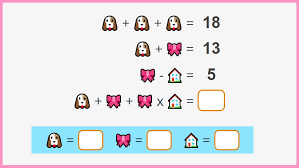
Logic puzzles have become one of the most popular forms of brain-training entertainment, appealing to students, adults, and even professionals in analytical fields. These puzzles challenge your reasoning, pattern recognition, and problem-solving abilities in a fun and engaging way. Whether you enjoy classic grid puzzles, riddles, lateral-thinking problems, or mathematical logic challenges, logic puzzles offer countless benefits for mental development and cognitive fitness.
Why Logic Puzzles Matter
Unlike simple games based on guessing or luck, logic puzzles require structured thinking. Each clue must be evaluated, connected, and used to eliminate possibilities until the correct solution is revealed. This process mirrors real-world decision making, where information must be analyzed and compared to draw conclusions.
Studies show that solving logic puzzles improves:
Critical thinking: You learn to evaluate evidence, eliminate inconsistencies, and form logical conclusions.
Concentration: Logic puzzles require focus, attention to detail, and the ability to track multiple variables.
Memory: Remembering clues, patterns, and connections naturally enhances short-term memory.
Problem-solving skills: You practice breaking down complex situations into smaller steps.
These cognitive benefits make logic puzzles ideal not only for entertainment but also for educational settings and professional development.
Types of Logic Puzzles
Logic puzzles come in many forms, each offering unique challenges:
1. Grid-Based Logic Puzzles
These are among the most iconic. You’re given a table of possibilities and clues to determine who owns what, who lives where, or which event occurred in what order. They require systematic elimination and careful deduction.
2. Logical Riddles
Riddles challenge your lateral thinking. Instead of step-by-step deduction, they encourage creative reasoning—often requiring a shift in perspective to see the solution.
3. Mathematical Logic Puzzles
These include number patterns, sequences, probability puzzles, and algebra-based challenges. They’re excellent for students who want to strengthen mathematical reasoning.
4. Pattern and Sequence Puzzles
These puzzles test your ability to spot trends and identify the missing piece in a sequence. They mimic the skills needed in coding, design, and analytical professions.
5. Deductive Reasoning Stories
Short stories with hidden clues encourage readers to piece together information, similar to detective work. Moral puzzles and philosophical logic puzzles also fall under this category.
Why Logic Puzzles Are Great for All Ages
Logic puzzles are highly adaptable, making them suitable for children, adults, and seniors.
Children strengthen early reasoning and mathematics skills.
Adults use puzzles for stress relief and brain exercise.
Seniors keep their cognitive abilities sharp, which supports long-term brain health.
Because logic puzzles are available in digital apps, printable PDFs, books, and online platforms, they are easily accessible for anyone.
Logic Puzzles in the Digital Age
With mobile apps and online puzzle platforms growing rapidly, logic puzzles have become more accessible than ever. Online logic puzzle generators, Sudoku apps, and interactive puzzle games allow users to challenge themselves daily. Many platforms offer difficulty levels ranging from beginner to expert, letting users progress at their own pace.
The rise of AI-generated puzzles and adaptive difficulty systems has also made logic puzzle training more personalized, giving each user puzzles tailored to their skill level.
How Logic Puzzles Improve Daily Life
People who practice logic puzzles regularly often find improvements in:
Organization skills
Analytical thinking
Creativity
Emotional resilience
The combination of fun and mental stimulation makes logic puzzles a valuable tool for both work and personal development.
Conclusion
Logic puzzles are more than just entertainment—they are an enjoyable way to exercise the brain, develop critical skills, and maintain cognitive health. Whether you’re solving a classic grid puzzle, tackling a tricky riddle, or exploring digital logic games, each challenge sharpens the mind and enhances problem-solving ability. As long as you stay curious and keep practicing, logic puzzles will continue to provide both fun and intellectual growth.


